
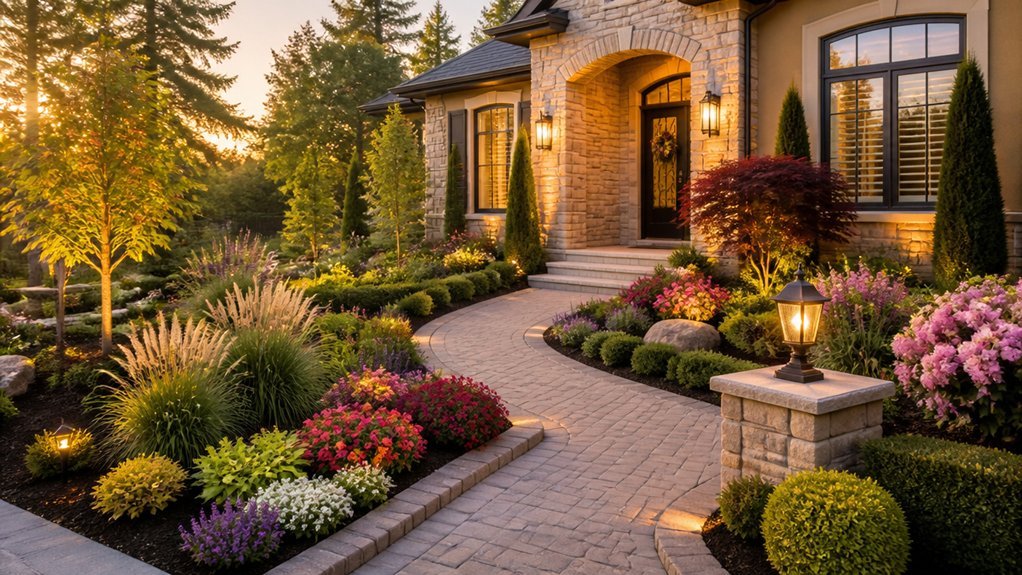
First impressions matter, especially when it comes to your home. Strategic plant placement, thoughtful color selection, and consistent maintenance form the foundation of appealing landscaping. These elements work quietly in the background to welcome visitors before they ever reach your door.
Symmetry draws the eye naturally. Consider framing your entrance with matching planters filled with seasonal blooms, or flanking a boldly painted front door with identical shrubs. Well-maintained pathways guide guests smoothly toward your home while adding structure to the overall design.
Hardscaping deserves equal attention alongside greenery. Stone walkways, retaining walls, and patios create texture and year-round visual interest even when plants lie dormant. Thoughtful landscape lighting then extends that appeal into evening hours, highlighting architectural features and ensuring safe passage.
Not every improvement requires substantial investment. Swapping out annual flowers, refreshing mulch, or power washing existing surfaces can transform tired spaces quickly. The most successful curb appeal comes from understanding how softscape, hardscape, lighting, and maintenance interweave into one cohesive, inviting picture.
Create a Welcoming Entryway
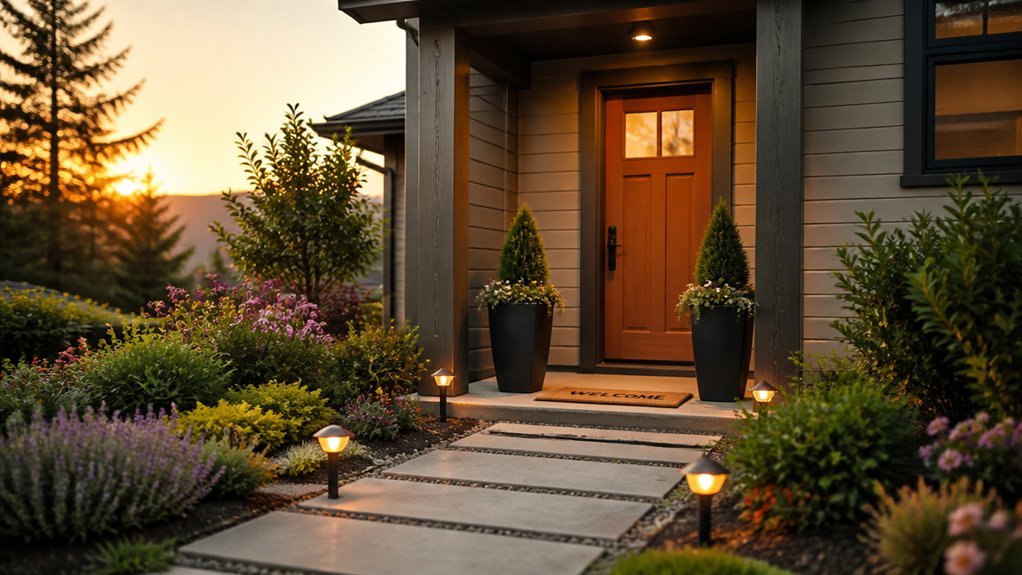
The entryway is typically the first area visitors notice when approaching a home, making it an important focus for curb appeal. A well-maintained front door, painted in a contrasting color like deep blue or black, creates a focal point.
Adding symmetrical planters on either side of the entrance with evergreen shrubs or seasonal flowers provides visual balance. A clean walkway lined with mulch beds, landscape lighting near the door, and trimmed foundation plants contribute to an organized appearance.
These elements work together to establish a polished, intentional presentation that signals property maintenance and care to approaching visitors.
Plan Flower Beds for Year-Round Color
Flower beds that provide continuous color throughout the seasons require strategic planning and plant selection.
Spring bloomers like tulips, daffodils, and pansies establish early color.
Summer plants such as marigolds, zinnias, and impatiens maintain visual interest during warm months.
Fall options include chrysanthemums and ornamental grasses that extend appeal into cooler weather.
Winter evergreens, decorative cabbage, and berry-producing shrubs sustain landscape presence when other plants fade.
Layering plants by height and bloom time guarantees consistent coverage.
Grouping similar plants together creates visual impact.
Incorporating varied textures and foliage colors adds depth when flowers are not blooming.
Choose Trees and Shrubs as Living Focal Points
While flower beds establish seasonal color throughout the landscape, trees and shrubs create permanent structure and visual anchors for the entire outdoor space. Homeowners should select specimens based on mature size, growth rate, and local climate conditions.
Evergreens like boxwoods and junipers provide year-round foliage, while deciduous trees such as maples and dogwoods offer seasonal variation.
Placement matters greatly: positioning taller trees toward property lines and shorter shrubs near the foundation creates visual depth and balance.
Proper spacing prevents overcrowding as plants mature. Well-chosen trees and shrubs reduce maintenance demands while establishing a cohesive landscape framework that supports overall curb appeal.
Add Hardscaping to Define Your Landscape
Hardscaping elements, including pathways, patios, walls, and edging, establish structure and definition within a landscape design. These features create clear boundaries between planting areas, lawn spaces, and entertaining zones.
Brick or stone pathways guide visitors through the yard, while concrete patios provide functional outdoor living areas. Low retaining walls add dimension and prevent soil erosion on sloped properties.
Metal or plastic edging keeps mulch and plants contained within garden beds. Gravel driveways and decorative borders also enhance visual organization.
Properly placed hardscaping materials complement existing trees and shrubs, creating a cohesive landscape that improves overall curb appeal.
Build a Healthier, Greener Lawn
A vibrant, well-maintained lawn forms the foundation of strong curb appeal and requires consistent attention to soil quality, watering practices, and grass health.
Homeowners should test soil pH levels, typically aiming for 6.0 to 7.0 for most grass types. Applying appropriate fertilizers, nitrogen, phosphorus, potassium, addresses nutrient deficiencies.
Watering deeply but infrequently encourages deep root growth, generally requiring one to one and one-half inches weekly. Mowing at correct heights, usually two to three inches depending on grass species, prevents stress.
Aerating compacted soil annually improves water penetration and root development. Addressing bare patches through overseeding restores lawn density and appearance.
Light Your Landscape for Evening Impact
Landscape lighting extends the visual appeal of outdoor spaces into evening hours, transforming nighttime views and enhancing property security.
Uplighting illuminates trees and architectural features, creating depth and dimension.
Path lights guide visitors safely along walkways, driveways, and garden borders.
Spotlights highlight focal points like fountains or sculptures.
Solar-powered options reduce electricity costs and installation complexity.
Warm white bulbs, around 2700 Kelvin, provide welcoming ambiance.
Timing systems and motion sensors increase convenience and efficiency.
Strategic placement prevents glare while emphasizing landscape design elements.
Proper lighting extends the property’s usable hours and increases nighttime visibility.
Transform Your Curb Appeal on a Budget
Improving curb appeal does not require expensive installations or extensive renovations. Homeowners can enhance their front yards through strategic, low-cost improvements.
Mulching flower beds, planting shrubs, and adding perennials provide visual interest without substantial expense.
Pressure washing the driveway, walkway, and house exterior removes dirt and grime effectively. Fresh paint on the front door, shutters, or trim offers noticeable impact.
Edging garden beds creates clean, defined lines. Installing solar pathway lights adds evening visibility and ambiance.
Removing dead branches, weeds, and clutter improves overall appearance.
These practical solutions deliver meaningful results while respecting budget constraints and requiring minimal financial investment.
Frequently Asked Questions
How Often Should I Water My Landscaping Plants During Different Seasons?
Plants require more frequent watering during spring and summer growth periods, typically two to three times weekly. Fall watering decreases to once weekly, while winter demands minimal irrigation as dormancy reduces moisture needs considerably.
What Permits or HOA Approvals Do I Need Before Starting Landscaping Projects?
One must navigate bureaucratic labyrinths where neighbors mysteriously gain veto power over shrubs. Homeowners typically require local building permits for major work and HOA approval if governed by restrictive covenants. Always verify local regulations beforehand.
How Can I Prevent Common Pests From Damaging My Landscaping Plants?
One can prevent pest damage by selecting pest-resistant plant varieties, maintaining proper spacing for airflow, regularly inspecting foliage, removing dead plant material, and applying organic or chemical treatments when necessary.
What’s the Best Time of Year to Plant Trees and Shrubs?
Could there be a more opportune moment than when nature itself prepares the ground for growth? Trees and shrubs thrive best when planted during fall or early spring, when temperatures are mild and soil moisture remains adequate for root establishment.
How Do I Maintain My Landscaping Features to Ensure Long-Term Durability?
Property owners should establish regular watering schedules, prune plants seasonally, mulch garden beds annually, and inspect hardscaping for damage. Professional inspections every few years help identify issues early, ensuring landscaping features remain attractive and structurally sound.
Conclusion
Implementing these landscaping strategies produces measurable improvements in property appearance and value. A homeowner who painted their front door deep blue, added symmetrical planters with seasonal flowers, installed pathway lighting, and mulched beds reported increased home appeal within weeks. These practical modifications require moderate effort, offer budget-friendly options, and deliver noticeable results. Strategic landscaping transforms any property’s exterior presentation through deliberate, purposeful improvements.