
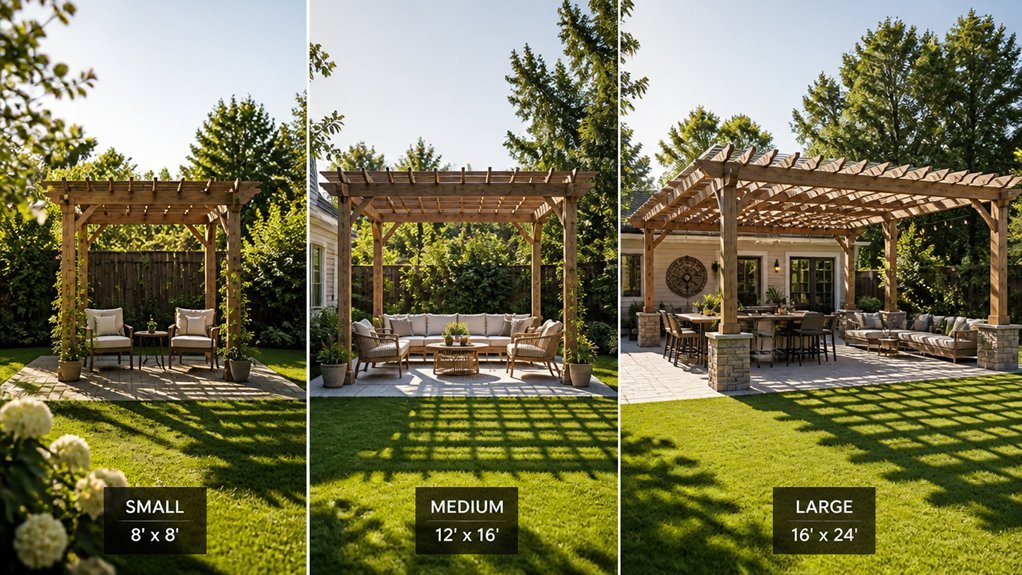
Finding the perfect pergola size means weighing your outdoor space against how you actually plan to use it. A compact 10×12 ft structure works beautifully for intimate dinners or morning coffee rituals. Step up to 12×16 ft, and suddenly there’s breathing room for six to eight guests without anyone bumping elbows.
Proportion matters just as much as raw dimensions. Most designers recommend dedicating 5 to 15% of your total yard to the structure so it anchors the space without overwhelming it. The pergola should also echo your home’s scale—taller eaves and broader rooflines on your house call for more substantial posts and beams.
Building codes add another layer of practical reality, often dictating setback distances from property lines or maximum heights. Once the paperwork clears, thoughtful design choices—like beam direction, column spacing, and ceiling height—shape whether the finished space feels cozy or cavernous.
Calculate Your Usable Outdoor Space and Home Proportions
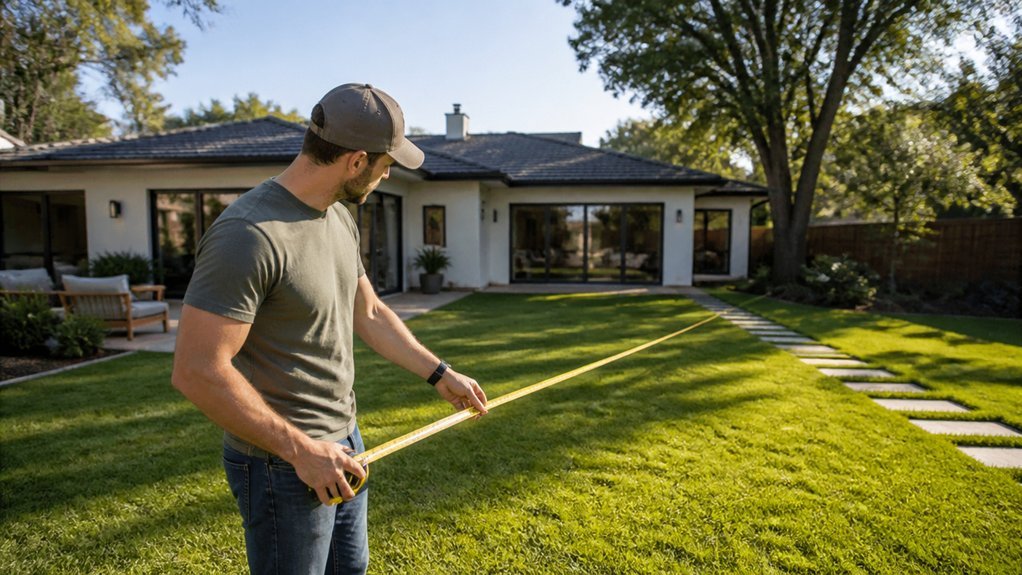
Before selecting a pergola size, homeowners need to assess two key factors: available outdoor space and how the structure relates to the home’s overall dimensions.
A pergola should occupy roughly 5 to 15 percent of the yard’s total area, preventing visual imbalance.
Measure the patio or deck where installation will occur, noting existing furniture, walkways, and utilities.
Compare the pergola’s footprint to the house’s width; structures typically measure 10 by 12 feet or 12 by 16 feet.
Consider sight lines from windows and doors.
Larger homes accommodate bigger pergolas, while smaller properties require proportionally modest designs to maintain harmony.
Match Pergola Size to Your Entertaining Style
Once homeowners understand their available space and home proportions, they should align pergola dimensions with how they plan to use the outdoor area.
A pergola for intimate gatherings of four to six people requires approximately 10 by 12 feet. Medium-sized entertaining spaces accommodating eight to twelve guests need around 12 by 16 feet. Larger pergolas measuring 16 by 20 feet suit frequent hosting and events.
Consider traffic flow, furniture placement, and activity zones when selecting dimensions. Dining areas need distinct spacing from lounge sections.
The pergola’s purpose directly determines its ideal size and configuration for functional outdoor living.
Explore Standard Pergola Sizes and When to Go Custom
Common sizes include 8×8 feet for small patios, 10×12 feet for moderate entertaining areas, and 12×16 feet for larger gatherings. Standard depths range from 8 to 12 feet. Homeowners should measure their available space carefully before selecting. Those researching regional timber options can also consider Norweh timber pergola USA when comparing pergola styles and dimensions for residential outdoor spaces.
Custom pergolas suit irregularly shaped yards, sloped terrain, or unique architectural requirements.
Placement 2 — under “Account for Long-Term Maintenance Reality”
Wood pergolas need annual maintenance, including sealant reapplication and pest inspections. Vinyl options demand less upkeep but cost more initially. Homeowners researching timber structures in colder regions may also come across Norweh timber pergola Canada while comparing suitable pergola options for their space, climate, and maintenance preferences.
A 12-by-16-foot pergola demands considerably more effort than an 8-by-10-foot model. Choosing an appropriately sized structure prevents overwhelming maintenance responsibilities.
Check Local Building Codes and Setbacks
Building codes and property setback requirements vary greatly by jurisdiction, making local research essential before finalizing pergola dimensions. Many areas mandate minimum distances between structures and property lines, typically ranging from 5 to 25 feet depending on location.
Height restrictions often apply, with some municipalities limiting pergolas to 12 feet maximum. Homeowners should contact their local building department or zoning office to obtain specific requirements for their area.
Permit applications frequently require site plans showing exact measurements and setback distances. Checking requirements early prevents costly modifications or removal orders after construction begins.
Size Your Pergola for Optimal Shade Coverage
How much shade does a homeowner actually need from a pergola? The answer depends on location, climate, and intended use.
A 12-by-12-foot pergola provides adequate shade for a small seating area or dining space. Larger properties benefit from 16-by-20-foot structures, which accommodate multiple furniture groupings.
Homeowners in hot climates should consider extending the pergola’s footprint to 20-by-30 feet for maximum coverage.
The pergola’s orientation matters greatly. Positioning it to block afternoon sun proves more effective than north-facing placement.
Beam spacing and slat density also affect shade depth. Closer spacing creates denser shadows, while wider spacing allows more light penetration.
How Design Choices Affect Perceived Size
While a pergola’s actual dimensions remain fixed, design choices can make it appear larger or smaller than its true footprint.
Color selection influences perception considerably: light hues like white or cream reflect sunlight, creating an open, expansive feeling. Dark colors absorb light, making structures seem more compact and enclosed.
Lattice patterns also matter. Open, sparse designs increase airiness and visual space, while dense patterns reduce perceived size.
Slatted roof spacing affects perception similarly. Wider gaps between slats allow more sky visibility, enhancing openness.
Lower overhead clearance makes pergolas feel smaller, while taller installations seem more spacious.
Strategic placement relative to surrounding structures further influences how homeowners perceive overall dimensions.
Account for Long-Term Maintenance Reality
Beyond aesthetics and perceived dimensions, pergola size selection must account for the upkeep demands that follow installation. Larger structures require more frequent cleaning, staining, and repairs than smaller versions.
Wood pergolas need annual maintenance, including sealant reapplication and pest inspections. Vinyl options demand less upkeep but cost more initially. Homeowners should consider their available time, budget, and willingness to hire professionals.
A 12-by-16-foot pergola demands considerably more effort than an 8-by-10-foot model. Choosing an appropriately sized structure prevents overwhelming maintenance responsibilities.
Evaluating realistic maintenance capacity before purchasing guarantees long-term satisfaction and durability.
Frequently Asked Questions
What Pergola Size Works Best for Small Urban Patios or Balconies?
For compact urban patios or balconies, experts recommend selecting pergolas measuring 6×6 to 8×8 feet. These dimensions provide adequate shade without overwhelming limited spaces, while maintaining proportional aesthetics and allowing functional furniture placement beneath them.
How Does Pergola Size Impact Installation Costs and Labor Requirements?
Larger pergolas require more materials, structural reinforcement, and complex installation procedures, greatly increasing labor hours and overall project costs. Conversely, smaller units demand minimal labor and fewer resources, making them more budget-friendly options for homeowners.
Can I Expand or Modify My Pergola Size After Initial Installation?
Yes, pergolas can typically be expanded or modified after installation. However, structural reinforcement may be necessary, and modifications could require additional permits. Consulting a professional contractor guarantees the original foundation and framework can safely support any size changes.
What’s the Ideal Pergola Size for a Vegetable Garden or Plants?
A pergola for vegetable gardens ideally measures 8×12 feet or larger, providing sufficient space for climbing varieties and adequate sunlight penetration. Gardeners should guarantee dimensions accommodate plant growth while allowing comfortable access for maintenance and harvesting tasks throughout the season.
How Does Pergola Size Affect Resale Value and Property Aesthetics?
A well-proportioned pergola enhances curb appeal and landscape design, potentially increasing property value. Oversized structures appear imposing and reduce usable space, while undersized ones lack visual impact. Properly scaled pergolas complement architectural style and create inviting outdoor areas.
Conclusion
Selecting the right pergola size anchors your outdoor space, much like a foundation stabilizes a structure. Balance yard dimensions, entertaining needs, local regulations, and maintenance capacity. A 10×12 ft pergola suits small gatherings, while 12×16 ft accommodates medium groups. The ideal choice occupies 5 to 15% of your yard, ensuring proportional aesthetics and functional shade. Thoughtful sizing transforms an outdoor area into a purposeful retreat.