
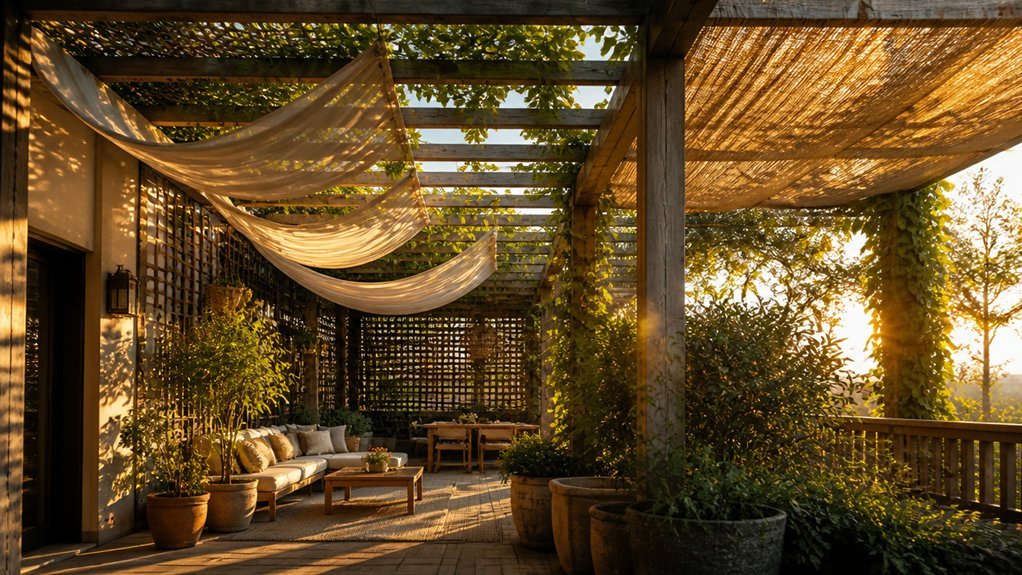
A pergola offers beautiful architectural structure, yet its open slats often leave you wanting more protection from harsh sun. Homeowners seeking fuller coverage have several appealing paths to explore. The key is matching your solution to how you actually use the outdoor space.
Retractable shade cloths bring wonderful flexibility. Pull them across when the afternoon glare intensifies, roll them back to stargaze in the evening. For those with patience, climbing vines like jasmine or wisteria create living, breathing shade that improves with each season. Shade sails deliver instant results with bold, modern geometry.
Louver panels put precise control in your hands, tilting to catch cooling breezes or block midday heat. Outdoor curtains frame the space with soft elegance, filtering light while adding privacy. Each approach carries its own cost considerations and climate suitability. Budget, local weather patterns, and personal taste ultimately guide the decision toward what serves the space best.
Install Retractable Shade Cloths for Flexible Coverage
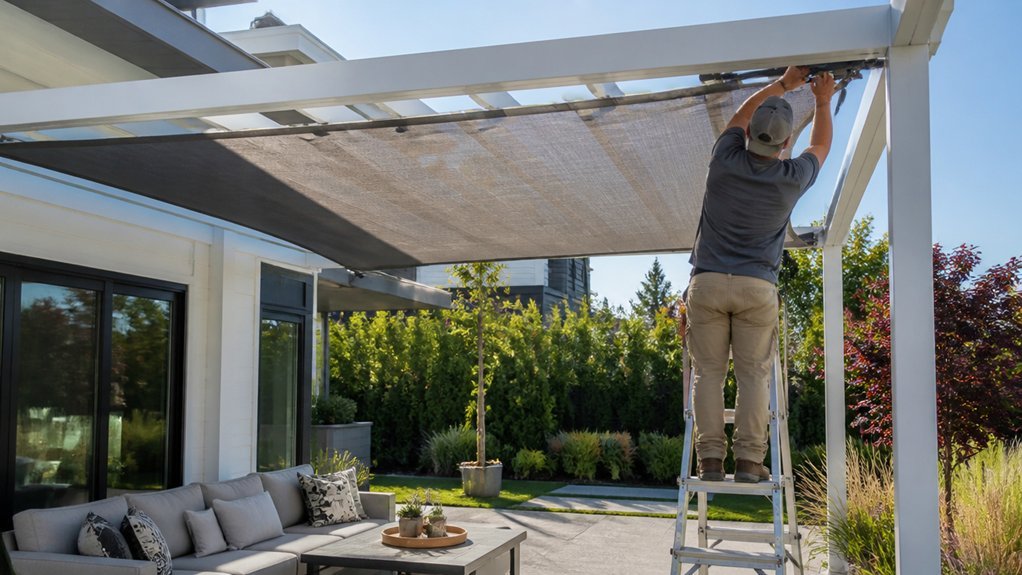
Retractable shade cloths offer pergola owners an adjustable solution that blocks sunlight when needed and retracts when conditions change. These cloths, typically made from polyester or vinyl, attach to pergola frames using tracks or cables. Popular options include motorized systems and manual pull designs.
Homeowners can adjust coverage throughout the day, responding to weather shifts and sun angles.
Installation requires mounting hardware, proper alignment, and secure fastening to support cloth weight. Shade cloths reduce temperatures underneath by ten to fifteen degrees.
Maintenance involves occasional cleaning and checking mechanisms for smooth operation and durability.
Plant Climbing Vines to Create Natural Shade
While shade cloths provide immediate coverage, climbing vines offer a long-term solution that develops gradually over seasons. Popular options include clematis, jasmine, and Boston ivy, which attach to pergola structures naturally.
These plants require regular watering, pruning, and fertilizing to establish strong growth. Vines typically need one to three years to cover a pergola fully. They provide cooling benefits through leaf transpiration and create habitats for beneficial insects.
Seasonal variations affect coverage, with deciduous varieties offering less shade in winter months. Gardeners should select vines suited to their climate zone and sunlight conditions for best results.
Add a Shade Sail for Modern Sun Protection
For those seeking immediate, adjustable shade without waiting years for plant growth, shade sails offer a practical alternative. These triangular or rectangular fabric panels attach to pergola posts, trees, or ground anchors, creating customizable coverage.
Materials like high-density polyethylene block UV rays effectively while allowing water drainage. Installation requires sturdy mounting points and proper tension to prevent sagging.
Shade sails come in neutral colors, earth tones, and bold hues to match existing landscapes. They’re removable for seasonal adjustments, making them flexible solutions for varying sunlight patterns throughout the year.
Upgrade to Adjustable Louver Panels
Adjustable louver panels offer more control over shade than fixed structures, allowing homeowners to modify sunlight exposure based on time of day, season, and weather conditions.
These motorized or manual systems feature horizontal slats that tilt open or closed, providing flexible coverage.
Popular options include aluminum louvers and polycarbonate panels, which resist weathering and require minimal maintenance.
Installation involves mounting the framework securely to pergola beams, ensuring proper alignment and support.
Homeowners can operate them manually with cranks or upgrade to motorized versions for convenience.
This solution balances aesthetics with functionality, maintaining pergola visibility while delivering adjustable protection.
Use Outdoor Curtains and Fabric Drapes
Outdoor curtains and fabric drapes present an alternative approach to pergola shading that offers aesthetic flexibility without mechanical components. These materials block sunlight while allowing air circulation beneath the structure. Homeowners can select from various fabrics, including solution-dyed polyester, which resists fading and mildew.
Installation requires mounting hardware, typically hooks or rods, attached to pergola beams or posts. Retractable options provide adjustable coverage for different times of day. Weather-resistant curtains withstand rain and wind exposure.
Neutral colors like tan and gray complement most outdoor settings, while darker shades provide maximum sun protection. Fabric drapes require occasional cleaning but offer a cost-effective shading solution compared to permanent installations.
Choose the Right Shade Method for Your Needs
How can homeowners determine which shading method works best for their specific pergola and climate? Several factors require consideration: local weather patterns, budget constraints, aesthetic preferences, and maintenance willingness.
Hot, sunny regions benefit from retractable shade cloths or metal lattice panels that block UV rays effectively. Areas with moderate sun exposure suit outdoor curtains or climbing vines. Homeowners in rainy climates should prioritize water-resistant materials like polycarbonate panels.
Those preferring minimal upkeep might choose fixed structures, while others accept regular maintenance for flexible options. Evaluating these variables, including pergola size, orientation, and personal usage patterns, ensures selection of an appropriate shading solution.
Maintain Your Pergola Shade Year-Round
Protecting shade structures from weather damage requires regular inspection and timely upkeep throughout the seasons. Homeowners should check fabric panels, retractable awnings, and climbing vines for tears, mold, and debris buildup.
Cleaning gutters prevents water accumulation, while inspecting fasteners guarantees structural stability.
During winter, removing heavy snow loads protects against sagging.
Spring maintenance includes checking for pest damage and UV deterioration.
Summer demands frequent cleaning to prevent algae growth on shade materials.
Fall preparation involves securing loose components before storms arrive.
Storing retractable systems indoors extends their lifespan.
These consistent maintenance tasks preserve functionality and appearance year after year.
Frequently Asked Questions
How Much Does It Cost to Add Shade to a Pergola on Average?
The average cost ranges from $500 to $3,000, depending on the shade solution chosen. Retractable shade cloths cost less, while permanent structures like louvered systems command higher prices. Installation complexity and material quality greatly influence final expenses.
What Is the Best Time of Year to Install Pergola Shade Solutions?
Spring and early fall offer ideal installation conditions. Mild temperatures and lower humidity reduce material warping and worker discomfort. These seasons also allow adequate time before extreme summer heat or winter weather arrives, ensuring proper curing and durability.
Do I Need a Permit to Add Shade Structures to My Pergola?
Studies show 60% of homeowners skip permit checks, risking fines. Whether one needs a permit depends on local building codes and shade structure type. Most jurisdictions require permits for permanent installations, while temporary solutions often remain exempt from regulations.
How Long Do Different Shade Materials Typically Last Before Replacement?
Shade material lifespans vary considerably. Fabric retractable awnings typically last 5-10 years, while polycarbonate panels endure 10-15 years. Shade cloth generally requires replacement every 3-5 years. Metal structures can last 15-20 years with proper maintenance and care.
Can I Combine Multiple Shading Methods on a Single Pergola?
Curiously, many homeowners discover that layering shade solutions works remarkably well. One can combine retractable awnings with climbing vines, or pair shade cloth with pergola panels. This strategic combination maximizes coverage while creating aesthetic flexibility and improved temperature control.
Conclusion
Adding shade to a pergola involves selecting from multiple practical options: retractable cloths, climbing vines, shade sails, louver panels, and outdoor curtains. Each method offers distinct advantages regarding flexibility, aesthetics, and maintenance requirements. Homeowners should evaluate their climate, budget, and design preferences before deciding. Proper installation and seasonal maintenance guarantee long-term performance. The right shade solution transforms a pergola into a virtually unbearable-heat-free outdoor space, enhancing comfort and usability throughout warm months.