
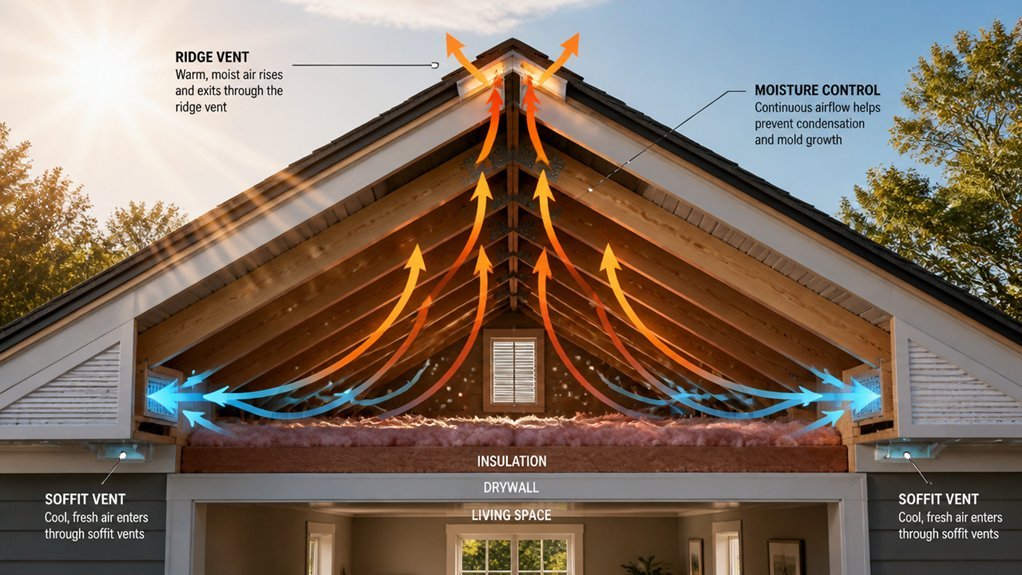
Roof ventilation quietly performs one of the most important jobs in your home. It keeps air moving through attic spaces, pushing out stifling heat during summer months and warding off damaging moisture when temperatures drop. This constant exchange protects everything beneath your roof.
The consequences of poor ventilation add up quickly. Homeowners often discover mold spreading through insulation, wood rot compromising structural integrity, or ice dams forming along eaves. Energy costs climb steadily too, as trapped heat forces air conditioners and heating systems to work harder than they should.
Effective systems rely on a balanced partnership between intake and exhaust vents. Soffit vents draw fresh air in while ridge or gable vents release the hot, humid air that rises naturally. When this balance breaks down, warning signs appear: stuffy upper floors, visible moisture stains, or unexpectedly high utility bills.
Knowing when to upgrade matters just as much as the initial installation. Aging homes often need additional vents, modern materials, or complete system replacements to meet current standards. A professional assessment can reveal whether your ventilation still serves your home’s needs.
How Roof Ventilation Works: Intake, Exhaust, and Airflow
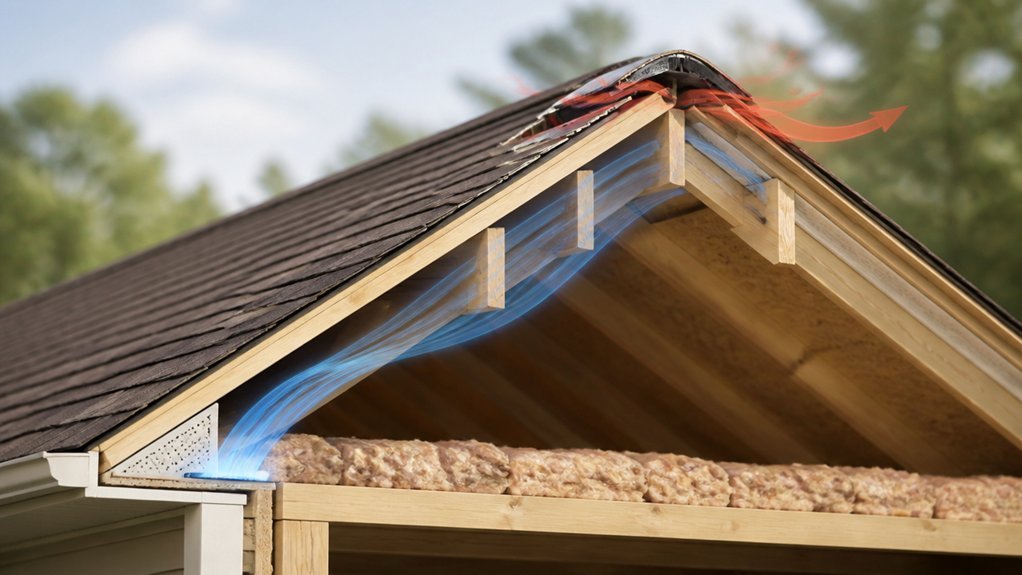
Proper roof ventilation operates on a simple principle: air enters through intake vents, moves across the attic space, and exits through exhaust vents. Soffit vents positioned under the eaves allow cool outdoor air to enter the attic.
This air flows horizontally across the space, then rises and escapes through ridge vents or gable vents at the roof’s peak.
The continuous airflow removes moisture and heat, preventing damage. Intake and exhaust vents must balance in size and placement for effective circulation.
Blocked or inadequate vents reduce airflow, causing moisture accumulation and deterioration of insulation, wood framing, and roofing materials.
Why Balanced Ventilation Prevents Moisture Damage
When intake and exhaust vents work together in equal measure, moisture that accumulates in the attic space gets removed before it causes problems.
Imbalanced ventilation creates conditions where wet air becomes trapped, leading to mold growth, wood rot, and insulation deterioration.
Balanced systems maintain consistent airflow, pulling fresh outside air through soffit vents while simultaneously pushing humid air out through ridge or gable vents.
This continuous cycle prevents moisture buildup during temperature fluctuations and seasonal changes.
Homeowners benefit from reduced energy costs, extended roof lifespan, and protection against costly structural damage.
Proper ventilation design requires equal intake and exhaust vent areas for ideal performance.
How Attic Ventilation Controls Temperature and Reduces Energy Costs
Attic ventilation actively regulates temperature by allowing hot air to escape during summer months and preventing heat accumulation that can exceed 150 degrees Fahrenheit.
Cooler attics reduce the workload on air conditioning systems, lowering energy consumption and utility bills.
During winter, proper ventilation prevents warm air from melting snow on roof edges, which causes ice dams.
Ridge vents paired with soffit vents create continuous airflow, maintaining consistent temperatures year-round.
Homes with adequate attic ventilation typically experience 10-15% energy savings compared to poorly ventilated structures.
This passive cooling mechanism protects both the building envelope and mechanical systems from temperature extremes.
Preventing Ice Dams and Summer Heat Buildup
Because temperature fluctuations create distinct seasonal challenges, homeowners must address ice dam formation in winter and heat accumulation in summer through strategic ventilation practices.
Winter ice dams occur when warm attic air melts roof snow, causing water to refreeze at cold eaves. Adequate ventilation maintains consistent attic temperatures, preventing this cycle.
Summer heat buildup can reach 150 degrees, damaging shingles and increasing cooling costs. Soffit and ridge vents allow continuous airflow, expelling hot air upward and drawing cooler air inward.
Proper ventilation protects roof structure, extends material lifespan, and reduces seasonal energy demands markedly.
Signs Your Roof Ventilation System Is Failing
A failing ventilation system sends several warning signals that homeowners can identify through routine observation.
Excessive heat in the attic, particularly during summer months, indicates inadequate air circulation. Moisture accumulation, visible as water stains or mold growth on wooden beams, signals ventilation breakdown.
Roof shingles that curl, buckle, or deteriorate prematurely suggest trapped heat and humidity. Ice dam formation along roof edges during winter occurs when warm air escapes through insufficient ventilation.
Visible rust on metal flashing or fasteners points to moisture problems. Pest infestations in attic spaces sometimes increase when ventilation openings become blocked or damaged.
Musty odors in upper-floor rooms warrant investigation into ventilation system condition.
Why Attic Ventilation Controls Temperature (And Saves Energy)
Thermal regulation through proper airflow stands as one of the most cost-effective functions a roof ventilation system provides.
During summer, ventilation allows hot air to escape the attic, reducing cooling costs by up to 30 percent. In winter, controlled airflow prevents moisture buildup while maintaining consistent temperatures.
Ridge vents paired with soffit vents create natural convection, drawing cooler air upward through the attic space. This continuous circulation prevents heat from concentrating in upper areas, which would otherwise transfer downward into living spaces.
Energy savings accumulate considerably over time, offsetting initial installation expenses through reduced utility bills and extended roof lifespan.
When to Upgrade Your Ventilation System
While energy savings demonstrate the value of proper ventilation, homeowners should recognize when their current systems no longer perform adequately.
Signs of needed upgrades include excessive moisture accumulation, visible mold growth, and inconsistent attic temperatures. Peeling paint, ice dams in winter, and higher cooling costs indicate failing ventilation.
Older homes with single-layer ventilation systems often need modern solutions. Homeowners planning broader roof improvements may also search for metal roofing near me when comparing roofing materials, ventilation upgrades, and professional installation options.
Updated soffit vents, ridge vents, and gable fans improve air circulation considerably. Professional inspections identify specific deficiencies.
Upgrading ventilation prevents costly structural damage, extends roof lifespan, and maintains comfortable indoor conditions year-round.
Frequently Asked Questions
How Much Does It Cost to Install or Upgrade a Roof Ventilation System?
Roof ventilation system installation costs typically range from $300 to $1,500, depending on home size, ventilation type, and complexity. Ridge vents, soffit vents, and attic fans vary in price. Homeowners should obtain multiple quotes from qualified contractors for accurate estimates.
Can I Install Roof Ventilation Myself, or Do I Need a Professional Contractor?
Installing roof ventilation requires specific expertise. While some homeowners tackle simpler projects, professional contractors possess necessary skills, tools, and knowledge to guarantee proper installation, compliance with building codes, and peak system performance. Professional installation is typically recommended.
What Types of Roofing Materials Work Best With Proper Ventilation Systems?
Like a well-orchestrated symphony, most roofing materials harmonize effectively with proper ventilation. Asphalt shingles, metal roofing, and wood shakes pair excellently with ventilation systems. Tile and slate also work well, though installation requirements differ slightly depending on the material selected.
How Often Should I Inspect and Maintain My Attic Ventilation System?
Homeowners should inspect their attic ventilation systems at least twice yearly—ideally in spring and fall. Regular checks help identify blockages, debris accumulation, or damage. Annual professional inspections are recommended to guarantee peak system performance and prevent costly damage.
Does Roof Ventilation Work Effectively in All Climate Zones and Weather Conditions?
Roof ventilation effectiveness varies by climate zone. In cold regions, it prevents ice damming and moisture buildup. Hot climates benefit from heat reduction. Humid areas require balanced intake-exhaust systems. Proper design guarantees year-round performance across diverse weather conditions.
Conclusion
Proper roof ventilation operates as the lungs of a home, drawing in cool air while pushing out hot, moisture-laden air. Homeowners who maintain balanced intake and exhaust systems prevent mold, wood rot, and ice dams while reducing energy costs. Regular inspections for blockages, damaged vents, and inadequate airflow guarantee long-term protection. Upgrading outdated systems protects roofing materials and maintains structural integrity for decades.