
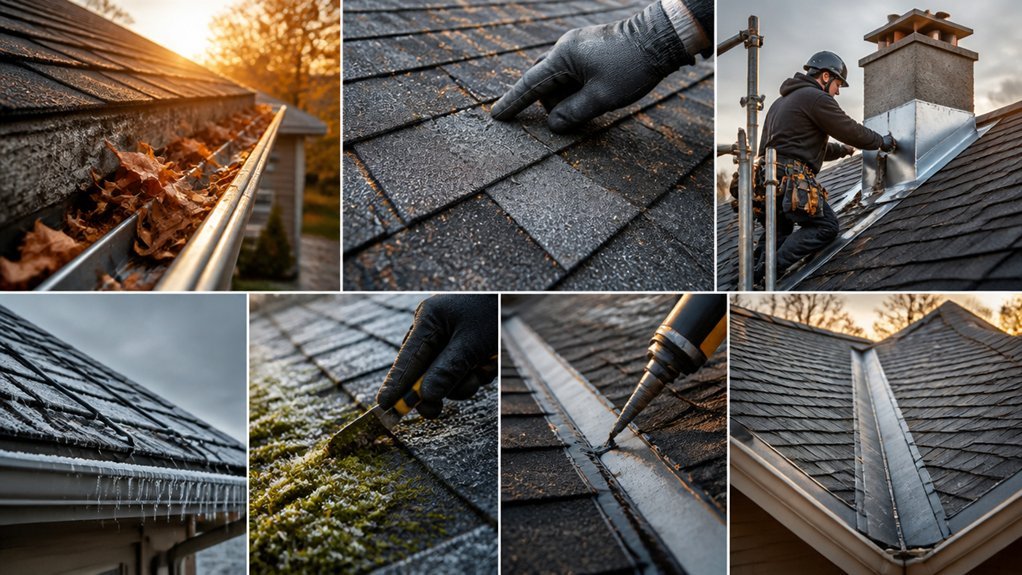
Winter roof preparation demands a methodical approach to protecting your home’s first line of defense. Start by inspecting shingles for cracks, curling, or missing pieces. Check gutters and flashing for wear, then schedule repairs promptly before cold weather sets in.
Branches hanging overhead pose a serious threat during ice and snowstorms. Trim back anything within six feet of your roofline, and remove accumulated leaves or pine needles from valleys and corners. These simple steps prevent moisture buildup and reduce fire hazards from nearby chimneys.
Attic insulation deserves particular attention as temperatures drop. Proper sealing and ventilation stop heat from escaping, which in turn prevents destructive ice dams from forming along your eaves. Different roof materials and regional climate patterns will shift which tasks deserve priority, so match your efforts to your specific situation.
Inspect Your Roof for Damage and Wear
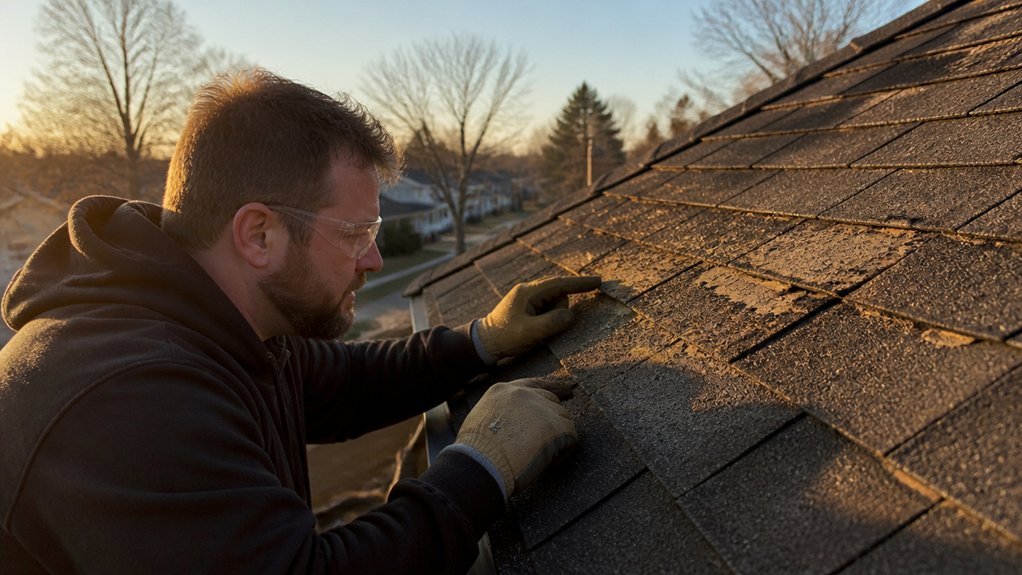
Before winter arrives, homeowners should examine their roofs for signs of damage, wear, and potential problems. Look for missing or cracked shingles, which expose underlying materials to water and ice damage.
Check flashing around chimneys, vents, and skylights for gaps or rust. Inspect gutters and downspouts for debris, leaves, and standing water that freeze during cold months.
Examine the roof’s surface for algae growth, moss, or curling edges. Look inside the attic for water stains, mold, or daylight penetrating through cracks.
Identifying these issues before winter allows homeowners to repair problems promptly, preventing costly water damage and structural deterioration during harsh weather conditions.
Clear Gutters and Downspouts Thoroughly
Clogged gutters and downspouts prevent water from draining properly, causing ice dams, water backups, and potential damage to the roof, walls, and foundation. Homeowners should remove leaves, twigs, dirt, and debris from gutters before winter arrives.
Downspouts require clearing as well, since blockages trap water near the home’s base. Using a ladder, gutter scoop, or garden hose helps dislodge accumulated material.
After cleaning, inspect gutters for sagging, holes, or loose fasteners. Properly functioning gutters direct water away from the structure, protecting against costly winter damage and structural deterioration caused by standing water and ice formation.
Trim Tree Branches Hanging Over Your Roof
Overhanging tree branches pose significant risks to roofs during winter months, as heavy snow and ice accumulation can cause limbs to break and fall onto shingles, gutters, and flashing. Homeowners should trim branches extending within six feet of the roofline, removing dead or diseased limbs first.
Sharp pruning saws and loppers work effectively for smaller branches, while larger limbs may require professional arborists. Cutting at forty-five degree angles promotes healing and prevents water damage to trees.
Clearing debris after trimming prevents gutter blockage. This maintenance task reduces potential structural damage, extends roof lifespan, and minimizes costly repairs from fallen branches during winter storms.
Repair or Replace Damaged Shingles Now
Damaged shingles compromise roof integrity before winter arrives, allowing water infiltration that leads to rot, mold, and structural deterioration. Homeowners should inspect their roofs for missing, cracked, or curling shingles, particularly around valleys, flashings, and edges.
Common problem areas include spots where shingles have lost granules or show blistering. Replacing individual shingles costs less than addressing water damage later.
For multiple damaged sections, full roof replacement may prove more economical.
Professional roofers can assess damage severity and recommend appropriate repairs. Addressing shingle problems now prevents expensive interior damage during winter months.
Boost Your Attic’s Heat Retention
Proper attic insulation and ventilation work together to retain heat during winter months, reducing energy costs and preventing ice dam formation on the roof.
Homeowners should check insulation levels, targeting R-38 to R-60 depending on climate zone. Fiberglass batts, blown-in cellulose, and spray foam offer different benefits and costs.
Verify soffit vents remain clear of debris, allowing air circulation.
Seal air leaks around pipes, wires, and ductwork using caulk or weatherstripping.
Install baffles between rafters to maintain proper airflow.
A qualified inspector can assess current conditions and recommend upgrades for peak winter performance.
Stop Ice Dams Before They Start
Ice dams form when snow melts on the roof, then refreezes at the eaves where temperatures drop below freezing. This creates a barrier that forces water backward under shingles, causing leaks inside the home.
Proper attic insulation maintains consistent roof temperature, preventing unnecessary melting. Adequate ventilation allows cold air to circulate under the roof, keeping surfaces cool.
Clear gutters and downspouts before winter arrives, removing leaves and debris. Install heating cables along vulnerable edges as a preventive measure.
Ensure soffit vents remain unobstructed so air flows freely. These measures work together to minimize ice dam formation and protect the structure from water damage.
Schedule Your Pre-Winter Roof Inspection
While preventive measures like insulation and heating cables reduce ice dam risks, a professional inspection identifies existing damage before winter weather arrives.
Inspectors examine shingles, flashing, gutters, and ventilation systems for wear, cracks, and gaps. They check for missing granules, rust spots, and loose materials that cold temperatures worsen.
Homeowners should schedule inspections in fall, allowing time for repairs before snow accumulates. The process typically takes one to two hours.
Professional roofers provide written reports documenting findings and repair recommendations. Early identification prevents costly emergency repairs during winter, when weather conditions complicate work and prices increase.
Frequently Asked Questions
What Is the Best Time of Year to Prepare My Roof for Winter Weather?
Homeowners should prepare their roofs during late summer or early fall, ideally before October arrives. This timing allows professionals to complete necessary repairs and maintenance while weather conditions remain favorable and before winter storms arrive.
How Much Does a Professional Pre-Winter Roof Inspection Typically Cost?
Ironically, homeowners often delay inspections to save money, yet neglecting this modest investment typically costs far more. Professional pre-winter roof inspections generally range from $150 to $400, depending on roof size, complexity, and regional pricing variations.
Can I Safely Inspect My Roof Myself, or Should I Hire a Professional?
A homeowner can perform basic visual inspections from the ground using binoculars to check for obvious damage. However, professionals should handle detailed inspections, as they safely access steep surfaces and identify subtle issues that untrained eyes miss.
What Should I Do if I Find Major Roof Damage Before Winter?
If major roof damage is discovered before winter, one should contact a licensed roofing contractor immediately for professional assessment and repair. Delaying repairs risks water infiltration, structural damage, and costly interior harm during harsh winter weather conditions.
How Often Should I Check My Roof During Winter for New Damage?
Homeowners should inspect their roofs monthly during winter months, or after significant weather events like heavy snow or ice storms. More frequent checks help identify damage early before it worsens.
Conclusion
Ironically, homeowners often neglect roof maintenance until winter arrives, then scramble to address problems that preventive care could have avoided. By inspecting shingles, clearing gutters, trimming branches, and improving attic insulation before cold weather hits, one effectively prevents costly damage. Those who wait discover that winter’s harsh conditions—ice, snow, wind—expose every oversight. Preparation requires effort now, but avoids emergency repairs later, making the upfront work genuinely worthwhile.