
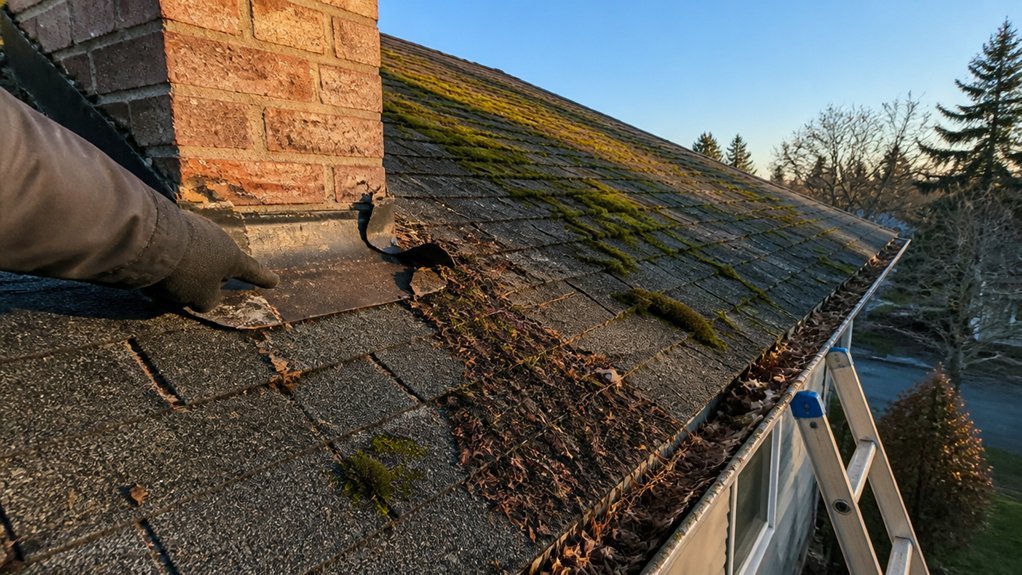
Spring brings the thaw, and with it, the perfect opportunity to assess what winter left behind. Homeowners should begin by inspecting shingles for cracks or curling, then check flashing around chimneys and vents for gaps that could invite leaks.
Cleaning gutters ranks among the most overlooked tasks, yet it prevents water from backing up and damaging fascia boards. Removing debris also reveals whether drainage systems function properly before spring rains arrive. Tree maintenance matters too—overhanging branches can scrape shingles or fall during storms.
Some warning signs demand immediate attention: dark spots on ceilings, sagging areas, or granules collecting in downspouts. Early detection typically saves thousands in repair costs, though certain structural issues require professional evaluation. Knowing when to call a contractor versus handling repairs yourself protects both your safety and your investment.
Inspect Roof Shingles for Damage

Homeowners should examine roof shingles carefully during spring, looking for signs of winter damage, deterioration, and wear.
Cracked, curled, or missing shingles require attention and potential replacement.
Check for granule loss, which appears as bald spots or sediment in gutters. Ice dams and heavy snow can separate shingles from the roof surface.
Inspect flashing around chimneys, vents, and skylights for gaps or corrosion. Look for algae growth, indicated by dark streaks or discoloration.
Document any damage with photographs for insurance purposes.
Professional roofers can assess structural concerns and recommend repairs.
Seal Roof Flashing and Close All Gaps
Roof flashing, the metal strips installed around chimneys, vents, skylights, and other roof penetrations, requires attention after winter weather loosens seals and creates gaps.
Inspect all flashing joints for cracks, rust, or separation from the roof surface. Check caulking around these areas, as deteriorated sealant allows water penetration.
Reapply roofing cement or caulk to any compromised sections, ensuring complete coverage of gaps. Verify that flashing sits flat and secure against the roof.
Pay particular attention to valleys where water accumulates. Addressing flashing issues prevents costly water damage inside the home and extends overall roof lifespan greatly.
Clean Gutters and Downspouts Thoroughly
Clogged gutters and downspouts prevent water from draining properly, causing it to back up under roof shingles and into fascia boards. Homeowners should remove leaves, twigs, and debris from gutters using a ladder and bucket.
Downspouts require clearing as well, since blockages redirect water toward the foundation.
After removing visible debris, flush gutters with a garden hose to check water flow. Inspect gutters for rust spots, sagging sections, and separation from the roofline.
Verify downspout extensions direct water at least four feet away from the house foundation. Regular gutter maintenance prevents water damage, mold growth, and structural deterioration.
Check Your Attic for Water Damage
After addressing gutter maintenance, inspecting the attic reveals whether water has penetrated the roof system. Homeowners should look for water stains on wooden beams, insulation, and drywall surfaces.
Discoloration, soft spots, and mold growth indicate moisture problems. Dark streaks running down rafters suggest active leaks. Check around roof penetrations like vents, chimneys, and skylights, where water commonly enters.
Inspect insulation for dampness or compression. Document findings with photos. Identify leak sources by tracing stains upward to their origin point on the roof.
Early detection prevents structural damage and costly repairs later.
Trim Tree Branches Over Your Roof
Overhanging branches pose several risks to roof integrity and longevity. Dead limbs, leaves, and twigs accumulate on shingles, trapping moisture that promotes rot and mold growth.
Branches rubbing against the roof surface cause abrasion damage to protective coatings. Heavy branches can break during storms, puncturing roofing materials and creating entry points for water infiltration.
Falling debris clogs gutters, preventing proper drainage and causing ice dam formation in winter. Property owners should trim branches extending over rooflines, removing dead wood first, then cutting back healthy growth to maintain clearance.
This maintenance task prevents costly repairs and extends roof lifespan considerably.
Document Damage With Photos and Notes
Capturing detailed records of roof damage serves as essential documentation for insurance claims, contractor estimates, and future maintenance planning.
Homeowners should photograph missing shingles, cracked tiles, dented gutters, and visible leaks from multiple angles.
Notes should include the damage location, size, and apparent cause, such as storm damage or age-related wear. Dating all photos and documentation guarantees accurate records for professional assessment.
Clear, well-lit images showing both close-up and wide-angle views provide contractors with necessary information for accurate quotes.
This systematic documentation protects homeowners during claims processing and establishes baseline conditions for tracking roof deterioration over time.
Call a Roofer for Major Issues
While documented photos and notes help homeowners understand roof damage, professional roofers must assess certain problems that go beyond routine maintenance.
Major issues requiring expert evaluation include structural damage, widespread leaks, missing flashing, and sagging sections. Large areas of missing shingles, rotted wood, or mold growth also demand professional attention.
Roofers can determine repair versus replacement needs, identify underlying problems causing surface damage, and guarantee work meets building codes.
Homeowners should contact roofers promptly when discovering significant damage, as delays allow water infiltration and additional deterioration that increases repair costs substantially.
Frequently Asked Questions
How Often Should I Schedule Professional Roof Inspections Beyond Spring Maintenance?
Homeowners should schedule professional roof inspections at least annually, preferably in spring and fall. Additionally, inspections are recommended after severe weather events, including storms, heavy snow, or high winds, to identify potential damage promptly.
What Is the Average Cost of Replacing a Residential Roof?
The average cost of replacing a residential roof ranges from $5,000 to $15,000, depending on roof size, material selection, and regional labor rates. Asphalt shingles remain the most affordable option, while metal and tile roofing command higher prices.
Does Homeowners Insurance Typically Cover Spring Roof Damage and Repairs?
One commonly assumes insurance covers all roof damage, yet this proves partially true. Homeowners insurance typically covers sudden, accidental damage like storm or hail impact. However, it generally excludes wear-and-tear repairs or maintenance issues requiring regular upkeep.
Can I Perform Roof Maintenance Myself or Should I Hire Professionals?
Homeowners can perform basic maintenance like gutter cleaning and debris removal themselves. However, professional roofers should handle inspections, repairs, and replacements to guarantee safety, proper workmanship, and warranty protection.
What Is the Typical Lifespan of Different Types of Roofing Materials?
Like trees shedding seasons, roofing materials age differently. Asphalt shingles last 15-20 years, while wood shakes endure 20-40 years. Metal roofs persist 40-70 years, and slate tiles outlive generations at 75-200 years, standing as monuments to durability.
Conclusion
Spring roof maintenance demands immediate attention, as winter’s relentless assault leaves shingles cracked, flashing gaping wide, gutters overflowing with debris, and attics potentially flooded. Homeowners who delay face exponentially multiplying damage: small leaks transform into massive water intrusion, mold spreads aggressively throughout structures, and repair costs balloon dramatically. Addressing these seven critical tasks—inspections, sealing, cleaning, attic checks, trimming branches, documenting damage, and calling professionals—prevents catastrophic deterioration and preserves roof integrity for years ahead.