
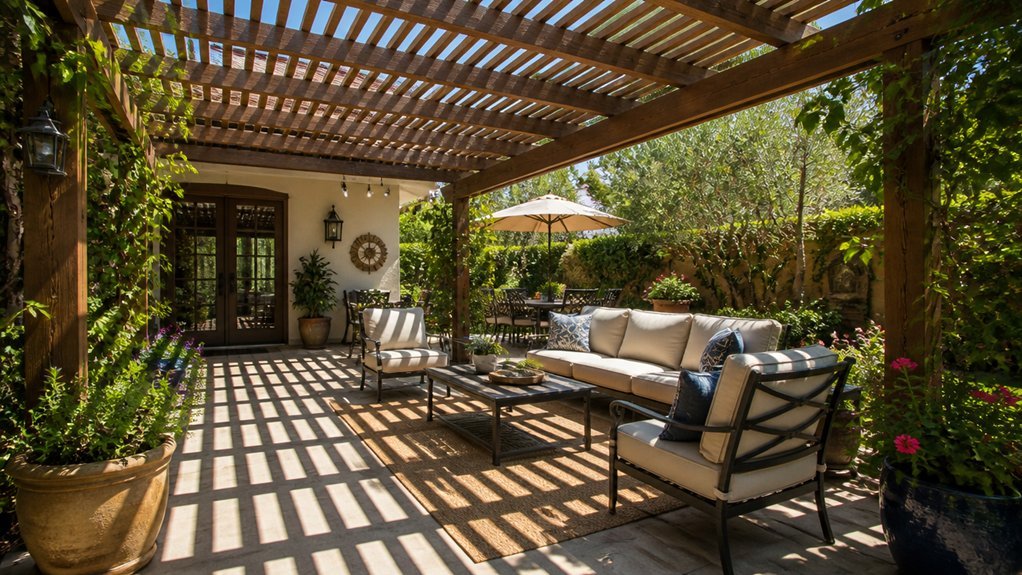
Pergolas offer a surprisingly flexible range of shade, though the exact coverage depends on how they’re built. Slats placed close together will typically block about half to three-quarters of direct sunlight. Wider gaps between those slats let considerably more light filter through, creating a dappled effect rather than true shelter.
The materials used make an equally important difference. Solid covers made from polycarbonate or similar substances deliver the strongest protection against harsh rays. Lattice-style construction, by contrast, leaves you with patchy coverage that shifts throughout the day as the sun moves overhead.
Where you live and what time of year it is also shape the experience noticeably. Lower sun angles in winter or at higher latitudes send light slicing through openings that summer midday sun would never reach. Seasonal changes can transform a comfortably shaded space into something far more exposed.
Weighing all these factors together matters when deciding if a basic pergola suffices. Sometimes the structure alone handles the need beautifully. Other situations call for added solutions like retractable canopies, climbing vines, or shade sails to bridge the gap.
How Much Shade Does a Pergola Provide?
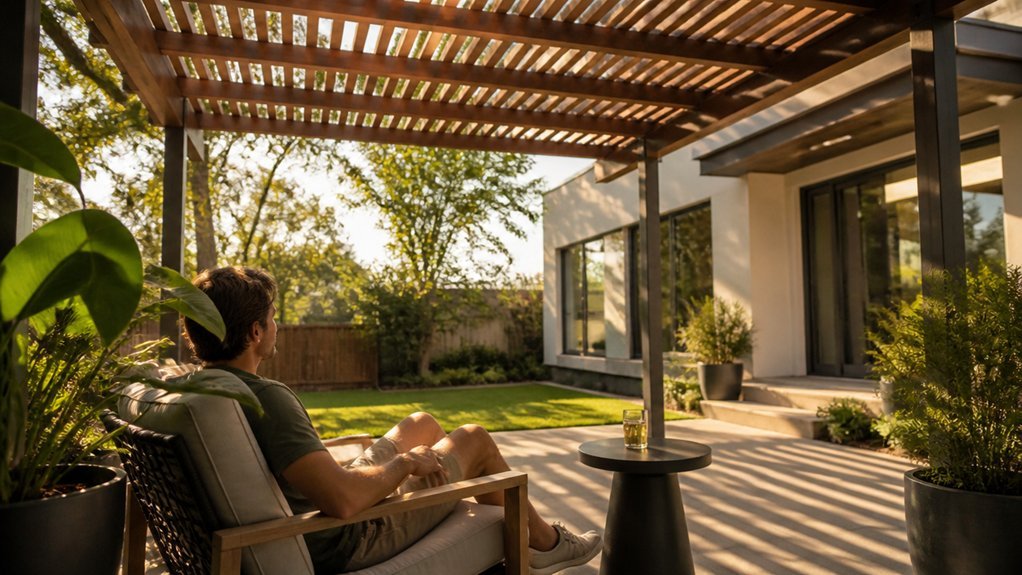
How much shade a pergola actually provides depends on several factors, including its design, materials, and orientation.
Pergolas with closely spaced slats, typically one to two inches apart, block approximately 50 to 75 percent of direct sunlight. Those with wider spacing allow more light penetration, reducing shade coverage to 30 to 50 percent.
Material density matters greatly: solid materials like polycarbonate panels provide maximum shade, while wooden lattice offers moderate protection.
Geographic location affects results, as sun angles vary by season and latitude. East-west orientation captures more afternoon sun than north-south positioning.
Time of day and season also influence actual shade levels beneath the structure.
What Controls Pergola Shade Coverage?
Several key factors work together to determine the actual amount of shade a pergola creates. The spacing between overhead slats directly affects coverage, with narrow gaps providing more shade than wide ones.
Latitude and season influence sunlight angles, meaning pergolas cast longer shadows in winter and shorter ones in summer.
Geographic location matters considerably, as southern regions receive different sun patterns than northern areas.
Material type also plays a role, with solid panels blocking more light than lattice designs.
The pergola’s orientation, whether it faces north or south, impacts shade distribution throughout the day.
How Beam Spacing and Slat Design Actually Change Your Shade
The foundation of pergola shade performance rests on two primary design elements: beam spacing and slat configuration.
Wider beam spacing, such as 12 inches apart, allows more sunlight penetration, creating dappled shade patterns. Narrower spacing at 4-6 inches greatly increases shade density.
Slat orientation matters equally; horizontal slats block overhead sun effectively, while angled designs reduce afternoon glare.
Material thickness affects shadow depth, with thicker beams producing darker shadows. A pergola with 6-inch beam spacing and horizontal slats typically provides 50-70% shade coverage, whereas 12-inch spacing delivers only 20-40% coverage.
Homeowners should match spacing and orientation to their specific shade requirements.
Seasonal and Time-of-Day Variations in Pergola Shade
While beam spacing and slat orientation establish a pergola’s baseline shade capacity, the actual shade performance changes throughout the day and across seasons. Morning and afternoon sun angles create varying shadow patterns, with low winter sun penetrating deeper beneath the structure than high summer sun.
In winter months, pergolas provide minimal shade when solar angles dip below 30 degrees. Summer months offer maximum coverage, particularly during midday hours when overhead sun produces dense shadows. Spring and fall shifts present moderate shade conditions.
Geographic location determines seasonal intensity. Northern regions experience greater seasonal variation than southern locations, affecting shade reliability throughout the year.
Boost Shade With Climbing Plants and Vines
Because pergolas alone cannot always deliver sufficient shade during peak sunlight hours, adding climbing plants and vines substantially improves their shading effectiveness. Ivy, clematis, and honeysuckle grow quickly across pergola structures, creating dense leaf coverage that blocks sunlight.
These plants establish root systems in soil or containers, requiring regular watering and periodic pruning. Deciduous varieties offer seasonal flexibility, providing maximum shade in summer while allowing winter light penetration. Evergreen options maintain year-round coverage.
Vine selection depends on climate zone, available sunlight, and desired growth rate. Proper installation on sturdy supports guarantees safety and longevity.
Pergola Shade Cloth and Retractable Systems
Two primary alternatives to climbing plants exist for enhancing pergola shade: shade cloth and retractable systems.
Shade cloth, made from polyester or polyethylene materials, blocks 30-90% of sunlight depending on density. Options include fixed installations or removable designs for seasonal adjustment.
Retractable systems feature motorized or manual mechanisms that roll fabric across pergola slats, offering flexible coverage control. Both solutions provide immediate shade without waiting for vegetation growth.
Shade cloth costs less initially, while retractable systems offer superior convenience and aesthetic appeal.
Selection depends on budget, desired shade percentage, maintenance willingness, and climate conditions.
When Pergola Shade Isn’t Enough: Better Alternatives
Even with shade cloth or retractable systems installed, pergolas may not provide sufficient protection during peak summer months or in particularly hot climates.
Homeowners seeking additional relief should consider complementary structures. Solid patio covers, constructed from aluminum or polycarbonate, block more sunlight than pergolas alone.
Gazebos offer enclosed shade with side protection. Tree planting near pergolas creates natural cooling through foliage.
Combining multiple solutions, pergolas with umbrellas, shade sails, or awnings, increases effectiveness.
Installing misters or fans beneath pergola structures enhances comfort. For extreme heat conditions, relocating outdoor activities indoors during afternoon hours remains the most practical approach to managing temperature exposure.
Frequently Asked Questions
How Much Does It Cost to Build a Pergola That Provides Adequate Shade?
A pergola providing adequate shade typically costs between $3,000 and $12,000 for a standard residential structure. Expenses vary based on materials chosen, size, design complexity, and whether professional installation is required versus DIY construction.
Can a Pergola Provide Enough Shade for Someone With Sun Sensitivity?
A pergola can provide adequate shade for sun-sensitive individuals if designed with closely-spaced slats or equipped with shade cloth. However, it offers moderate rather than complete protection, so additional measures like sunscreen remain advisable for ideal sun safety.
Do Pergolas Require Maintenance to Keep Shade-Providing Features in Good Condition?
Yes, pergolas require regular maintenance to preserve their shade-providing capabilities. Owners must clean debris, inspect structural integrity, treat wood, and repair or replace damaged slats or climbing plants that diminish shading effectiveness.
Will a Pergola Increase My Home’s Property Value or Resale Appeal?
A pergola is a golden ticket for home appeal. Yes, it typically increases property value by enhancing outdoor living spaces and aesthetic charm. Buyers often view well-maintained pergolas as desirable features, potentially improving resale prospects and market competitiveness.
How Long Does It Take to Install a Pergola in My Yard?
A pergola installation typically requires one to three days, depending on its size and complexity. Professional installers can complete most standard projects in a single day, while DIY installation may take longer based on individual skill level and preparation.
Conclusion
A pergola’s shade functions like a filter, letting light and shadow coexist rather than blocking one completely. Its effectiveness depends on design choices—slat spacing, materials, climbing plants—and natural factors like seasons and location. Homeowners must weigh their specific needs against what a pergola realistically delivers. When insufficient, layering solutions with shade cloth or retractable systems transforms an incomplete shelter into adequate protection.