
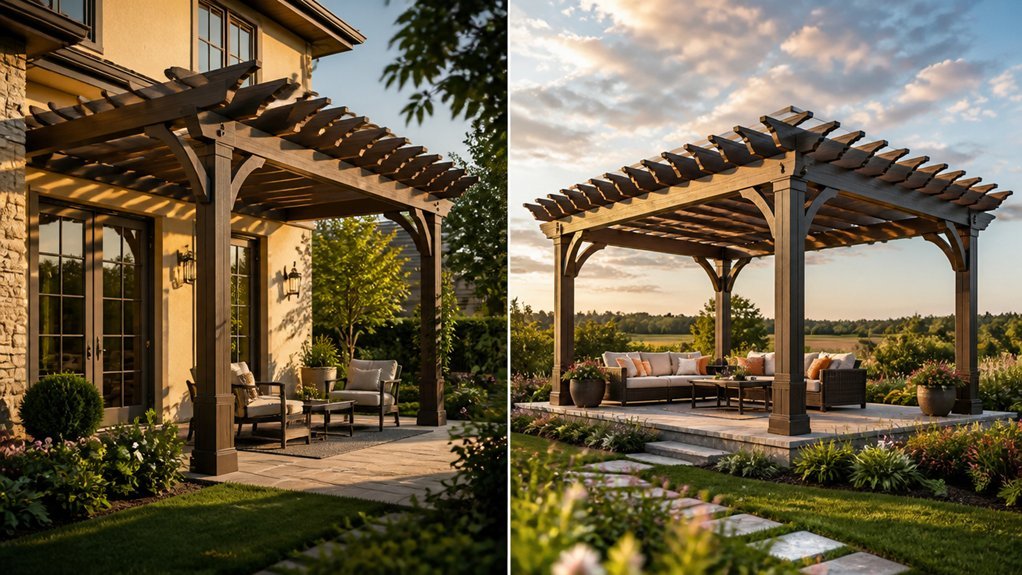
Choosing between an attached and freestanding pergola comes down to how you want to use your outdoor space. Attached pergolas anchor directly to your home or another structure, making them ideal for smaller yards. They typically cost less to install since they require fewer support posts and less material overall.
Freestanding pergolas offer something different entirely. These independent structures can go anywhere in your landscape, whether that’s poolside, in a garden corner, or as a centerpiece on your lawn. This flexibility lets you define separate zones for dining, lounging, or entertaining away from the house.
Your local climate matters more than many homeowners initially realize. Wind exposure, snow loads, and sun patterns will influence which design performs better over time. A professional can assess whether your home’s structure can handle an attached version or if a freestanding option with deeper footings makes more sense.
Budget, available space, and how you envision spending time outside all shape this decision. Neither style is universally superior. What works beautifully for a compact urban patio may feel misplaced on a sprawling suburban property. Consider your priorities carefully before committing to either approach.
Structural Differences: Attached vs. Freestanding
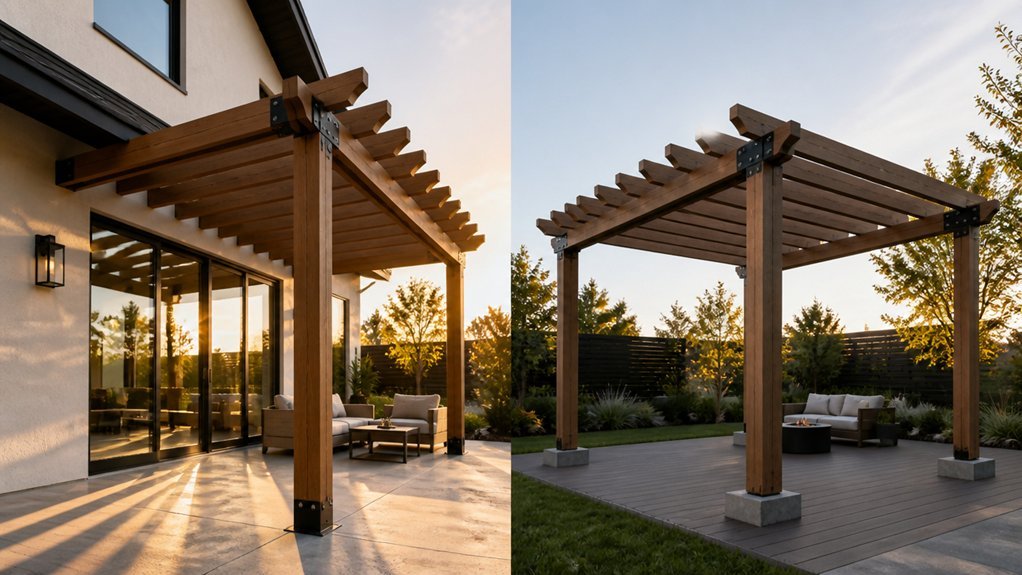
The fundamental distinction between attached and freestanding pergolas lies in their foundation and support systems.
Attached pergolas connect directly to existing structures, typically houses or buildings, using one or more sides for support.
Freestanding pergolas stand independently on their own foundation, requiring four support posts anchored into concrete footings.
Attached designs rely on ledger boards bolted to house walls, distributing weight efficiently.
Freestanding structures demand deeper post holes, usually 24-36 inches deep, to guarantee stability against wind and lateral forces.
Building codes often require different engineering specifications for each type, with freestanding models needing stronger, more robust construction throughout.
Cost Breakdown: Which Style Fits Your Budget
Because attached and freestanding pergolas require different construction approaches, their costs vary greatly.
Attached pergolas typically cost less, ranging from $1,500 to $5,000, since they utilize existing house structures for support.
Freestanding models require independent foundations, posts, and reinforcement, costing $3,000 to $8,000 or more.
Material choices greatly impact pricing: wood pergolas cost less than aluminum or vinyl options.
Additional expenses include permits, labor, site preparation, and finishing treatments.
Homeowners should obtain multiple quotes, compare material specifications, and factor in long-term maintenance costs when budgeting for either style.
Where Each Style Works: Placement and Design Flexibility
Attached pergolas suit homeowners with limited yard space, as they connect directly to existing house walls and require minimal ground area.
They work well for patios, decks, and entryways where homeowners want shade without sacrificing usable lawn.
Freestanding pergolas offer greater placement flexibility, standing anywhere in yards, gardens, or pools.
They work as focal points, pathway covers, or seating areas in open spaces.
Attached styles integrate with home architecture, while freestanding options allow creative positioning.
Yard size, existing structures, and intended use determine which style functions best for specific properties.
Installation: Attached Pergolas vs. Freestanding
Installation complexity differs markedly between attached and freestanding pergolas, affecting timeline, cost, and labor requirements.
Attached pergolas require securing one side to existing structures, such as house walls or garage exteriors. This demands precise measurements and compatible fastening systems.
Freestanding pergolas need independent support structures, requiring foundation work, post installation, and ground leveling.
Both styles demand proper permits and inspections.
Attached installations typically take two to three days, while freestanding projects require four to seven days.
Freestanding pergolas generally cost more due to extensive material needs and labor.
Professional installation guarantees structural integrity and safety compliance.
Maintenance and Durability Over Time
Longevity depends greatly on material selection, regular upkeep, and environmental exposure.
Attached pergolas, secured to house structures, require monitoring where they connect to siding and roofing.
Wood pergolas need annual staining or sealing to prevent rot and insect damage.
Vinyl and aluminum options demand less maintenance, requiring only occasional cleaning.
Freestanding pergolas experience greater weather exposure on all sides, necessitating more frequent inspections.
Ground-level connections deteriorate faster, especially in wet climates.
Both types benefit from debris removal, checking fasteners, and addressing damage promptly.
Material choice considerably impacts long-term durability and maintenance frequency.
Choosing Your Style: Yard Size, Climate, and Use Case
Selecting the right pergola type requires careful consideration of three primary factors: available yard space, local climate conditions, and intended use.
Attached pergolas suit smaller yards, as they utilize existing structures and require minimal ground space. Freestanding pergolas work better in larger properties, allowing flexible placement and standalone functionality.
Climate matters considerably: attached versions provide home protection in harsh weather, while freestanding options offer mobility in variable conditions.
Use cases determine choice as well: attached pergolas enhance patios and entryways, whereas freestanding structures serve garden features, entertaining areas, or shade solutions away from home foundations.
Common Mistakes When Choosing Between Styles
Many homeowners overlook critical factors when deciding between attached and freestanding pergolas, leading to costly missteps. Common errors include ignoring local building codes, which may restrict attached structures to certain setback distances from property lines.
Underestimating maintenance needs represents another frequent mistake, as attached pergolas require regular inspection of connection points.
Homeowners often misjudge yard space requirements, selecting freestanding models that obstruct sightlines or foot traffic patterns. Failing to evaluate future landscaping changes causes regret when trees grow or garden layouts shift.
Overlooking climate factors, such as wind exposure or snow load capacity, results in structural damage. Analyzing these elements beforehand prevents expensive corrections.
Frequently Asked Questions
Can I Convert a Freestanding Pergola Into an Attached One Later?
Yes, a freestanding pergola can be converted into an attached one. The structure would need to be repositioned against a house or building, then secured with appropriate brackets and fasteners to create a stable attachment to the existing structure.
Do Attached Pergolas Require Permits or Inspections From Local Authorities?
Like Icarus learning the hard way about rules, homeowners discover that attached pergolas typically require local permits and inspections. Regulations vary by jurisdiction, but most municipalities mandate approval since these structures attach to existing dwellings, affecting structural integrity and safety compliance.
Which Pergola Style Adds More Value to a Home’s Resale?
Attached pergolas typically add more resale value to homes than freestanding structures. They enhance the property’s visual appeal and expand usable outdoor living space, making homes more attractive to prospective buyers willing to pay premium prices.
How Do Weather Conditions Like Wind Affect Each Pergola Type?
Freestanding pergolas withstand strong winds better due to independent structural foundations, while attached pergolas may transfer lateral forces to the home’s structure. Wind engineering considerations differ markedly between the two designs.
Are There Warranty Differences Between Attached and Freestanding Pergola Options?
Manufacturers in the steam-powered era of pergola design typically offer comparable warranties for both attached and freestanding models, usually covering five to ten years. However, freestanding structures often receive extended protection due to their independent foundation requirements and increased weather exposure risks.
Conclusion
Selecting between attached and freestanding pergolas requires weighing budget, space, and climate conditions. Like a tree choosing between deep roots and spreading branches, each style offers distinct trade-offs. Attached pergolas suit limited yards and lower budgets, while freestanding options provide flexibility and visual impact. Homeowners should assess their property’s specific needs, wind exposure, and long-term maintenance capacity before deciding. Either choice delivers functional shade and aesthetic value.