
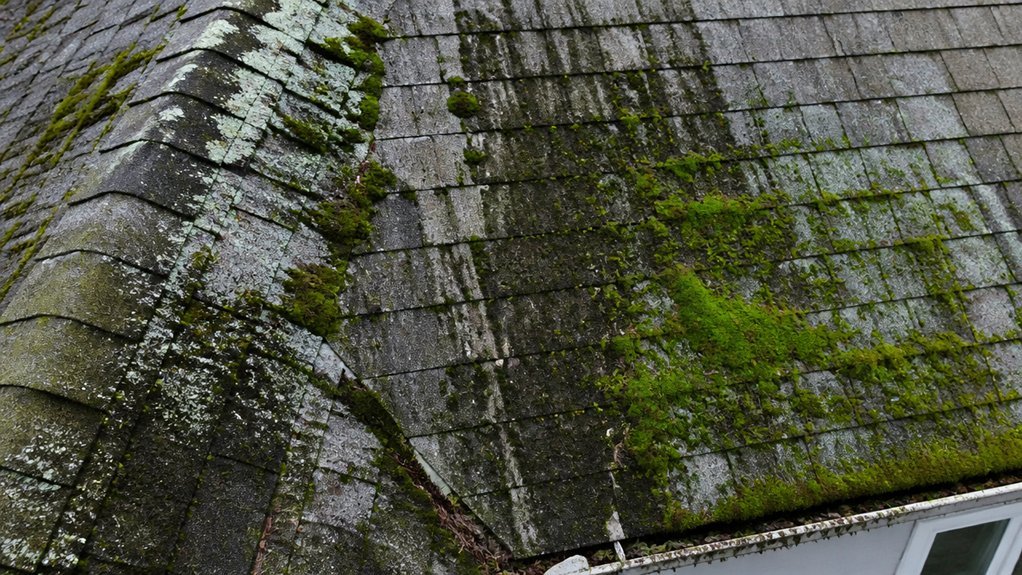
Moss and algae might seem like minor cosmetic issues at first, but they quietly wreak havoc on roofing materials. These organisms trap moisture against shingles and wood surfaces, creating the perfect environment for decay and rot to take hold. Over months and years, this persistent dampness weakens the structural integrity of the entire roof system.
The damage mechanism differs between these two invaders. Moss sends tiny roots into shingles and underlayment, physically prying materials apart and creating entry points for water. Algae, particularly the dark streaks common on asphalt shingles, creates a different problem by reducing solar reflectivity and causing surfaces to absorb more heat throughout the day.
Water pooling in moss-thick areas introduces another destructive cycle. During cold weather, this trapped moisture repeatedly freezes and thaws, expanding cracks in shingles and warping the wooden structures beneath. What begins as a thin green layer can eventually lead to costly repairs or full replacement if left unaddressed.
What Moss and Algae Do to Your Roof
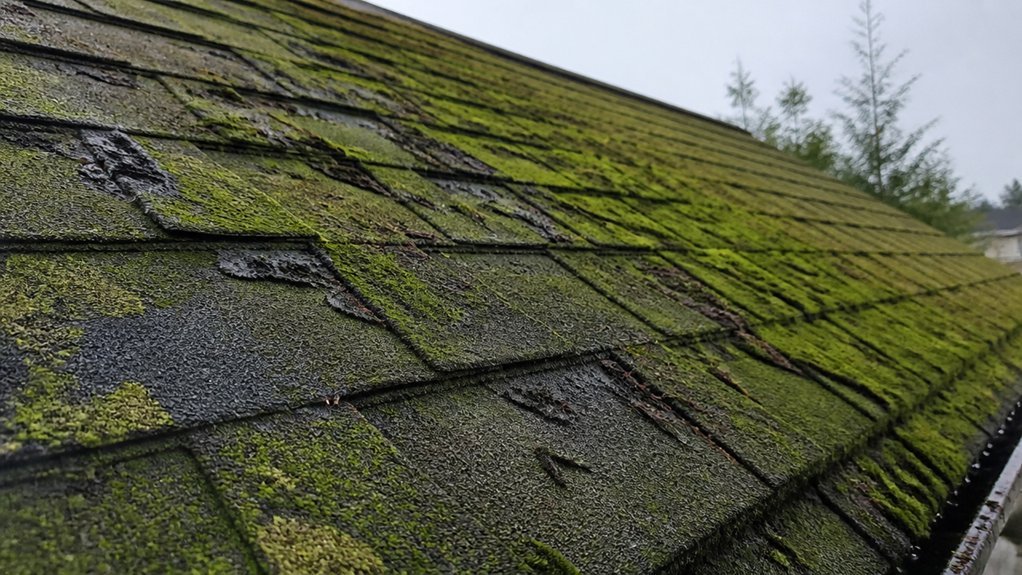
Moss and algae gradually damage roofing materials through several mechanical and chemical processes. These organisms retain moisture against shingles, wood, and metal surfaces, promoting decay and rot.
Moss roots penetrate roofing materials, causing physical deterioration and loosening shingles. Algae creates dark stains that reduce reflectivity, increasing heat absorption and accelerating material breakdown.
Both organisms trap water in layers, leading to freeze-thaw cycles during winter that crack and warp shingles. Over time, this damage compromises the roof’s protective barrier.
Debris accumulation clogs gutters and downspouts, preventing proper water drainage and causing water to pool underneath materials where it causes additional structural damage.
How to Spot Moss and Algae Before They Take Over
Early detection stops moss and algae from causing the damage described above, allowing homeowners to address problems before costly repairs become necessary.
Homeowners should inspect roofs seasonally, particularly in spring and fall, when moisture levels peak.
Dark streaks or patches indicate early algae growth, while thick, fuzzy green or gray material signals moss presence. Shaded areas, gutters, and north-facing slopes accumulate growth fastest. Close examination with binoculars from ground level works effectively, or homeowners can safely access lower roof sections.
Regular gutter cleaning prevents debris buildup that traps moisture. Noticing discoloration early enables prompt treatment before structural damage occurs.
Why Some Roofs Attract Moss and Algae
Certain environmental and structural conditions create ideal environments for moss and algae growth on residential roofs. Shade from nearby trees, dense foliage, and limited sunlight promote these organisms greatly.
Moisture retention matters greatly; poorly draining gutters, valleys, and low-slope roofs collect water. Cool, damp climates with high humidity levels increase growth rates considerably.
Roof materials like asphalt shingles and wood retain moisture more readily than metal or tile.
Debris accumulation, including leaves and dirt, provides nutrients and traps water. Northern-facing roof sections receive less direct sunlight, making them particularly susceptible to colonization.
What Untreated Moss and Algae Cost You
Neglect compounds quickly when moss and algae colonize a roof, creating expenses that extend far beyond the initial growth.
Organic matter traps moisture against shingles, accelerating deterioration and shortening roof lifespan by several years.
Water seeps beneath shingles, damaging decking, insulation, and interior walls. Repair costs escalate from hundreds to thousands of dollars when structural damage occurs. Insurance may not cover preventable biological growth.
Additionally, reduced curb appeal decreases property value. Cleaning becomes increasingly difficult as growth thickens.
Early intervention through treatment or removal prevents costlier structural repairs, preserving both roof integrity and financial resources.
Preventing Moss and Algae: Methods That Actually Work
Prevention requires a multi-layered approach that addresses moisture, sunlight, and debris accumulation on roof surfaces. Installing zinc or copper strips along roof ridges deters moss and algae growth through metal ion release.
Trimming tree branches to increase sunlight exposure reduces damp conditions where organisms thrive. Cleaning gutters regularly prevents water pooling and organic debris buildup.
Applying algaecide or fungicide treatments provides temporary protection, typically lasting two to three years. Ensuring proper roof ventilation and drainage minimizes moisture retention.
Selecting algae-resistant shingles during roof replacement offers long-term prevention. These combined strategies effectively reduce the likelihood of moss and algae colonization.
How to Safely Remove Moss and Algae From Your Roof
Removing moss and algae requires careful attention to safety, timing, and technique to avoid damaging roof materials. Homeowners should use low-pressure water spray, soft-bristled brushes, or chemical treatments containing zinc sulfate or copper compounds. High-pressure washing can strip shingles and create leaks.
Spring and fall offer ideal removal timing, when moisture levels support growth. Safety equipment includes harnesses, non-slip shoes, and eye protection.
Professional contractors often handle difficult cases on steep roofs. After removal, applying preventative treatments reduces regrowth likelihood.
Regular inspection and maintenance catch problems early, extending roof lifespan and preventing costly structural damage.
When to Call a Professional Roofer
While DIY moss and algae removal works for minor surface growth, certain situations call for professional expertise. Homeowners should contact a roofer when moss covers large areas, spreads across multiple roof sections, or returns quickly after removal.
Steep roofs, multiple stories, or structural damage also warrant professional help. Roofers have safety equipment, specialized tools, and knowledge of proper cleaning methods that prevent shingle damage. They can identify underlying moisture problems causing growth.
Professionals assess whether moss indicates roof decay or ventilation issues. Additionally, some warranty terms require professional maintenance, making expert help necessary to preserve coverage.
Frequently Asked Questions
Can Moss and Algae Grow Back After Professional Removal Treatment?
Yes, moss and algae can regrow after professional removal treatment. Without preventative measures, spores naturally return to roof surfaces through airborne transmission and moisture exposure. Regular maintenance and protective coatings greatly reduce regrowth likelihood.
Are There Eco-Friendly or Natural Products to Prevent Moss and Algae Growth?
Remarkably, just as nature creates these organisms, nature also provides solutions. Copper strips, zinc treatments, and vinegar sprays offer sustainable alternatives. Moss-inhibiting shingles and improved roof ventilation reduce moisture, preventing growth without harsh chemicals or environmental damage.
Does Homeowner’s Insurance Cover Moss and Algae Damage to Roofs?
Most standard homeowner’s insurance policies do not cover moss and algae damage, as insurers typically classify it as preventable maintenance. Homeowners should consult their specific policy or insurance agent for clarification on coverage details.
How Long Does Moss and Algae Prevention Treatment Typically Last?
Studies show untreated moss reduces roof lifespan by up to ten years. Prevention treatments typically last three to five years, though effectiveness varies based on climate, shading, and moisture levels, necessitating periodic reapplication for ideal protection.
Can I Walk on My Roof Safely While Removing Moss and Algae?
Walking on a roof during moss and algae removal poses significant safety risks. Homeowners should hire professional contractors who have proper equipment, training, and insurance. Professionals can safely navigate steep surfaces while minimizing damage and injury potential.
Conclusion
Moss and algae can literally destroy a roof if left unchecked. Regular inspection, proper drainage, and trimming overhanging branches prevent growth. When caught early, simple cleaning suffices; advanced cases require professional removal. The cost of prevention is millions of times cheaper than roof replacement. Homeowners should address these growths promptly, maintaining gutters and ensuring adequate sunlight exposure to protect their roof’s lifespan and structural integrity.